TedXTalk
Traveling as WOC
I presented a talk at the inaugural edition of TedXMacalester College. Collaborating with fellow students Myhana Kerr, Dylan Jekels, and Becky Githinji, we shared our experiences studying abroad in East Asia (China and Japan) as women of varying cultural and ethnic backgrounds.
Publications
Daburu Bind: Perceptions of the Speech of Mixed Race Japanese
Using a combination of media and sociolinguistic analysis, my paper explores how the speech practices of multiracial Japanese people are perceived. I was invited to present it at the Asian Junior Linguists Conference. It was published by International Christian University and can be accessed here.

Multimedia Collaborations
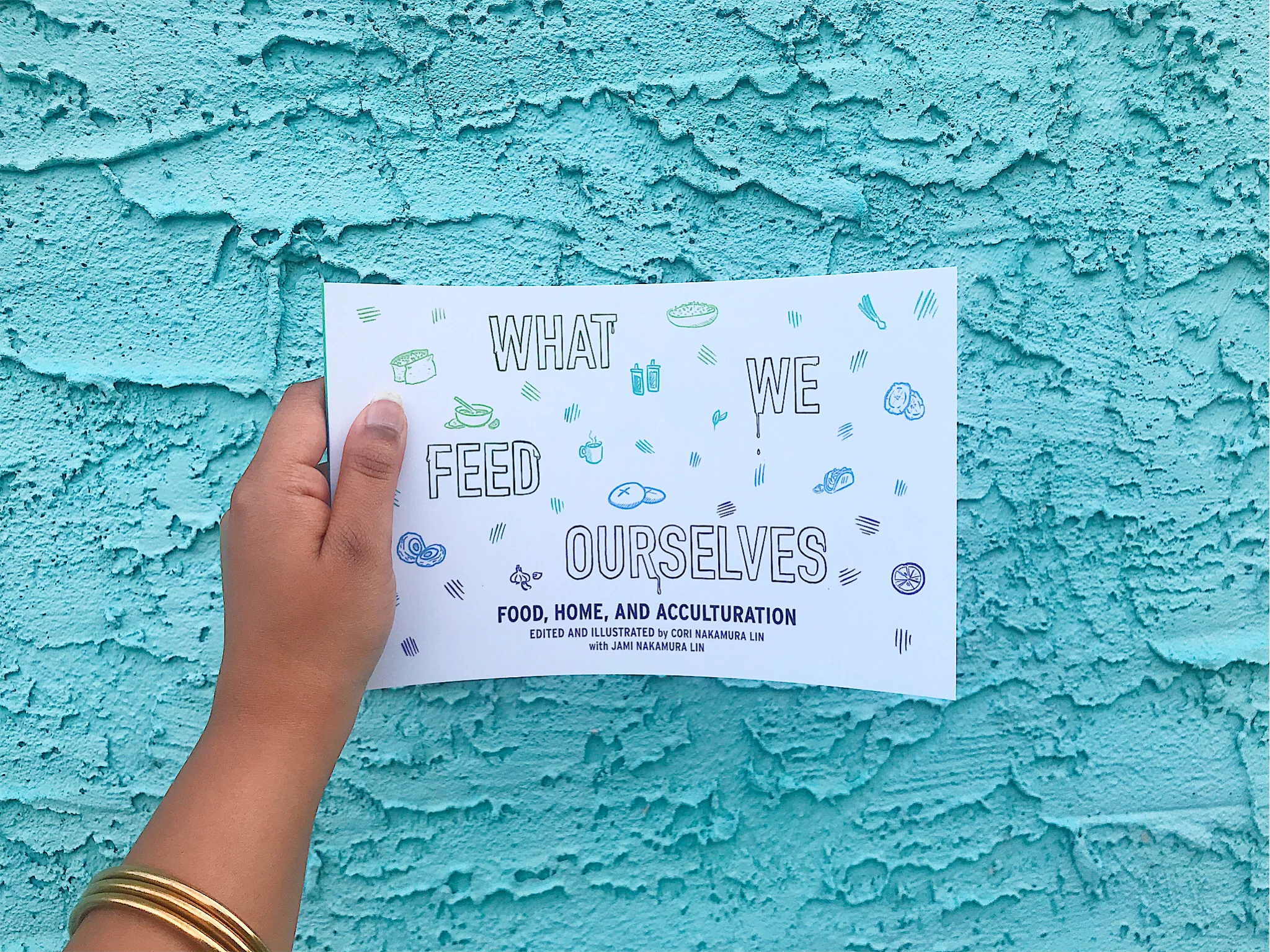
What We Feed Ourselves
What We Feed Ourselves is a multimedia project on food, culture, and acculturation led by multimedia visual artist Cori Nakamura Lin and her sister writer Jami Nakamura Lin. I contributed one essay to this collection.
Did You Eat? - "I: Ode to Immigrants" and "II: Reminder"
This zine was published by YOLOW Zines. I contributed two poems.

Postcard Project
-
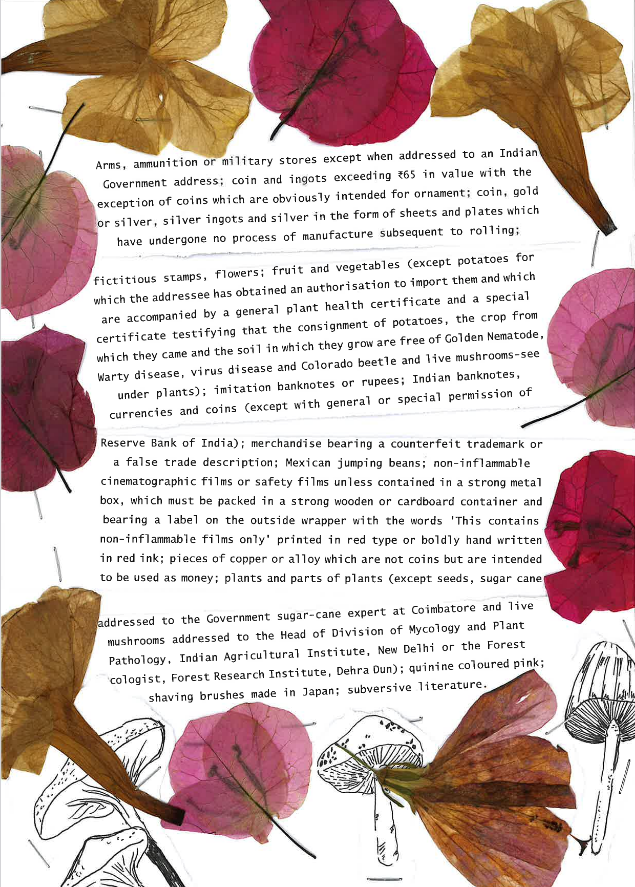
During the COVID-19 pandemic Hong Kong Post suspended airmail service to India. Spending hours parsing postal rules and regulations, I stumbled upon a list of items illegal to mail from elsewhere to India. To give a physical form to the disappeared, I fashioned it into a sendable 4x6 postcard.
This postcard bears the list of items prohibited by India Post. Some things seem commonsensical, while others appear curiously specific. For example: quinine coloured pink. The imperial anti malarial drug – made famous by gin & tonic cocktails, favourite libation of the Raj – was, apparently, tinted pink to prevent resale and once sold in one pice packets at the post office. By the 1910s British India emerged as the world's largest quinine consuming market.
Meanwhile, the ban on subversive literature is transparent in intent. “Subversive” is left undefined, its meaning opaque and conveniently all-encompassing. Texts discussing [redacted], [redacted], and [redacted] have long been purged from archives.
A border is formed by flowers I collected in areas of Hong Kong’s Central and Western District (Gough Street, Hollywood Road Park, U Lam Terrace) and pressed myself. Imported from South America by British officers to enhance the aesthetics of the colony, the golden trumpet (Chrysantha tabebuia) blooms for a brief ten days in March, while the magenta and blush of papery bougainvillea spilling over streets – also a well-travelled migrant– is a beloved sight in New Delhi and beyond. Here, the floral specimens lie wilted and flattened, gossamer impressions against the page.
Mushrooms – poison and medicine, decay and gratuitous life, the living-dead organism – simultaneously evoke past and ongoing projects of colonial botany, and growing global interest in foraging and food sovereignty.